

The ABH programme organised the Policy and Partnership Forum in October 2025.
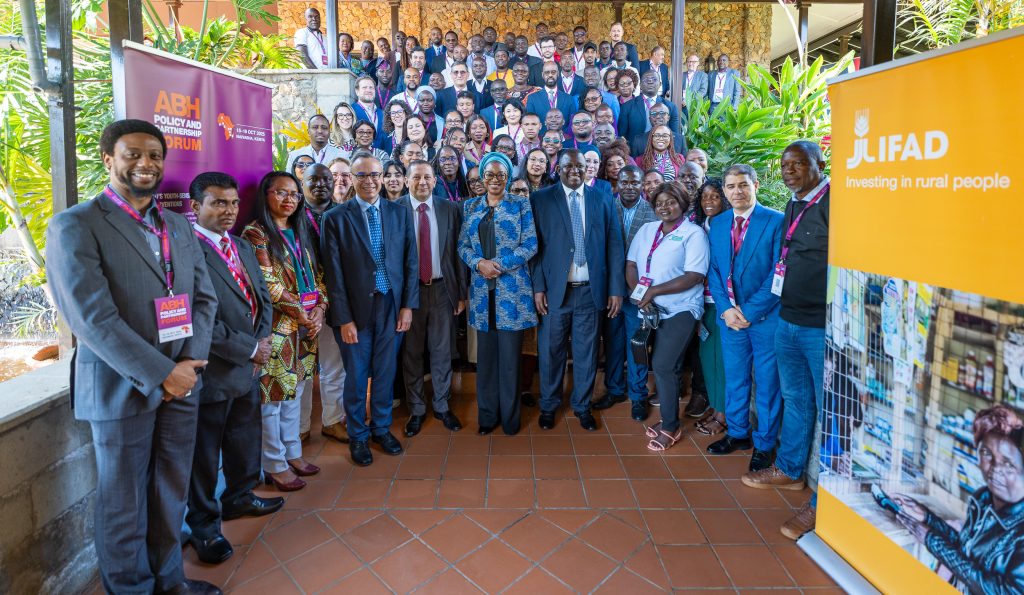
From 14 to 16 October 2025, the IFAD ECG Youth Team, in collaboration with the ESA and WCA Regional Offices and the Kenya Country Office, convened the Policy and Partnership Forum: From Learning to Policy Action in Naivasha, Kenya. The Forum opened with a field visit, followed by two days of dynamic dialogue, co-creation, and partnership-building.
Bringing together more than 100 participants including policymakers, youth leaders, implementing partners, donors, and private sector actors from 16 countries across the ESA, WCA, NEN, and APR regions, the event aimed to move beyond successful pilots and co-create an actionable policy roadmap to scale youth employment and entrepreneurship in the agri-food and its adjacent sectors.
Youth at the Center: Shaping the Policy Agenda
A defining feature of the Forum was the central role of youth. Nearly one in five participants were young beneficiaries of the flagship Agribusiness Hubs (ABH) Programme, taking the stage to present their experiences and shape forward-looking policy recommendations.
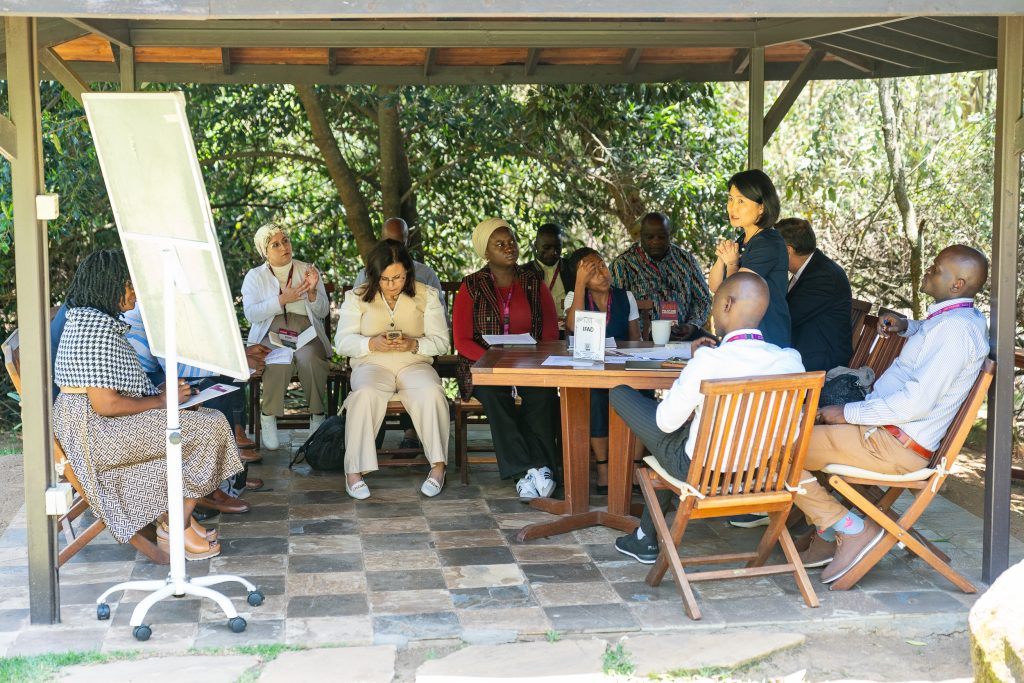
The highly interactive sessions focused on critical themes: private sector engagement, access to finance, market-relevant skills, gender inclusion, climate action, and digital innovation. At the heart of the event was the Policy Lab, a collaborative session where five working groups translating challenges into practical policy strategies. Discussions revealed a consistent body of evidence across the participating countries. Below are key takeaways.
- The private sector particularly SMEs and agribusinesses emerged as powerful engines of rural employment and community transformation. Ensuring businesses can thrive in enabling policy environments is crucial for scaling youth opportunities
- Unlocking youth potential requires aligning training with market needs, facilitating access to finance, and fostering robust public–private partnerships.
- Findings from successful initiatives confirmed that data-driven, context-sensitive programmes achieve lasting impact when backed by political will, youth leadership, and multi-stakeholder collaboration.
- Participants further emphasized that innovative financing models such as blended finance, credit guarantees, and accelerator programmes are key to de-risking youth-led ventures and driving entrepreneurship.
- A central proposal was to enable long-term land leasing, empowering youth to use land contracts as collateral for finance tackling one of the most persistent barriers to rural enterprise.
- Participants emphasized that decent work standards must underpin every effort to expand rural employment. Embedding fair labour laws, safe working conditions, and mechanisms for social dialogue were seen as essential steps toward sustainable jobs.
- Participants underscored that inclusivity is non-negotiable in employment policy. They emphasized the need to dismantle systemic barriers that limit women, persons with disabilities, and other marginalized youth from accessing economic opportunities.
- Discussions called for the institutionalization of youth participation through national youth advisory councils, quotas in decision-making bodies, and women’s empowerment to make youth and women active partners in policy development, implementation, and monitoring not passive recipients.
The Path Forward: A Mandate for Policy Coherence and Coordination
The ABH Policy Lab produced clear, evidence-based strategies that chart a concrete path from dialogue to implementation and monitoring. Policymakers underscored the importance of legislative alignment, institutional capacity development, innovative blended finance, and strong political will to ensure that these youth-led policy directions translate into lasting and inclusive employment opportunities.
The strategies developed at the Forum directly advance IFAD’s vision for youth inclusion and decent rural employment:
- Policy and Investment Synergy: Aligning IFAD’s investments with national reforms ensures that youth employment becomes systemic and sustainable, rather than merely project-based.
- Scaling Decent Jobs: Embedding Decent Work principles and providing dedicated support for youth employment operationalizes IFAD’s commitments to creating meaningful, long-term jobs.
- Empowering Rural Youth: Institutionalizing youth voice transforms young people from passive recipients into active partners in policy development, implementation and monitoring, strengthening ownership and impact.
Building on these strategies, the Agribusiness Hub initiative will be scaled up as a one-stop platform, creating and growing businesses, brokering employment, and strengthening local economies. Expansion is already underway, scaling up the ABH in a number of current programme countries and new initiatives launching in others such as Zambia and Sri Lanka, bringing IFAD’s vision for inclusive, sustainable youth employment closer to reality.

Media Publicity:
- https://x.com/IFADEastAfrica/status/1976620710245134641
- https://x.com/IFADEastAfrica/status/1975803458214154591
- https://x.com/IFADEastAfrica/status/1979103590074417646
- https://x.com/IFADEastAfrica/status/1978540460789428710
- https://x.com/IFADEastAfrica/status/1978452459640037806
- https://x.com/IFADEastAfrica/status/1978454807267381552
- https://x.com/IFADEastAfrica/status/1978453542575690051
- https://x.com/IFADEastAfrica/status/1978378489762849231
- https://youtu.be/Fh_FsUZ_XQ0?si=JBrs_YjgWu45QI28
- https://www.the-star.co.ke/news/big-read/2025-10-21-young-woman-from-njoro-is-cultivating-a-generation-of-agripreneurs
- https://www.standardmedia.co.ke/business/article/2001532371/state-bets-on-agribusiness-to-create-more-jobs-for-the-youth
- https://x.com/KBCChannel1/status/1980523595013947479?t=ZasOu45aX4HzBTbJzI-Glw&s=08
- https://x.com/KBCChannel1/status/1980524734665076808?t=nCmzfLVML6VkWQYcIeMHpw&s=08
- https://x.com/KBCChannel1/status/1980526552958763191?t=lyb7YR7gbKm9Uz6nDj9mJA&s=08\