
Mozambique
Launch Date:
October 2022
Targeted Age:
18-35 Years
No. of Beneficiaries
The project was designed to facilitate access to employment to 3,000 rural youth in Mozambique.

Delivering Results: Project Approach, Operational Highlights & Progress
The programme is being implemented by the Beira Agricultural Growth Corridor (BAGC) who have formed a consortium with the Instituto Agrario de Chimoio (IAC); Instituto de Promoção da Pequena e Média Empresa (IPEME), instituto politécnico Armando Emílio Guebuza and Instituto Politécnica Armando Guebuza (IPAEG) and Instituto Agrário de Marera (I.A.M).
Employment opportunities in Mozambique are limited and a target of 70% self employment and 30% wage employment has been adopted.
The project promotes both track of employment in the three target provinces and wage employment only in Manica and Tete; a similar project managed by GIZ promotes wage employment in Sofala. The project in Mozambique is part of the first batch of five participating countries launched at the beginning of the agribusiness hub programme.
Approach
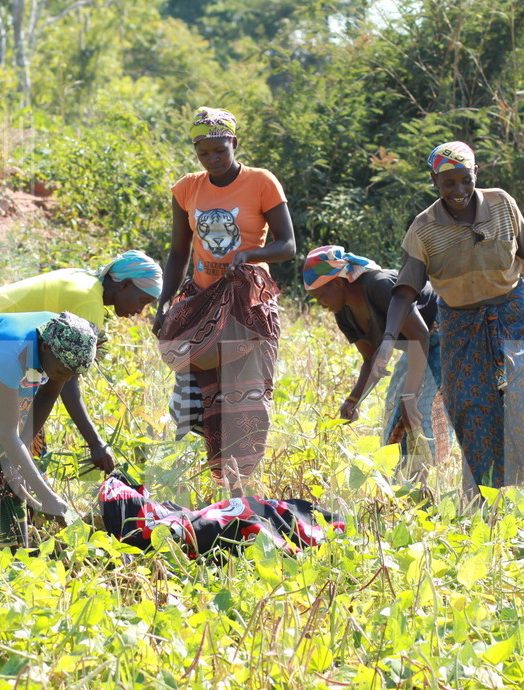
The project employs a multifaceted approach to youth employment, designed to accommodate diverse educational backgrounds and career aspirations. Central to this approach is the provision of tailored training, mentorship, and support services that empower youth to pursue either self-employment or wage employment. Recognizing the varied needs and potential of its beneficiaries, the program offers structured pathways to equip participants with the necessary skills and resources for sustainable employment. This strategic methodology not only addresses immediate employment challenges but also fosters long-term economic growth and resilience in the targeted provinces. Key components include;
Employment Pathway based support: Participants choose between two tracks: self-employment, which provides business development services, startup kits, business plan support, and access to finance, or wage employment, which places them in companies as interns or apprentices. Youth without higher education receive up to three months of training and mentorship in their chosen fields; those with higher education are directly placed in relevant industries with the potential for additional specialized training. All participants receive ongoing mentorship regardless of the employment track they choose.
Consortium Structure: BAGC leads a consortium with Instituto Agrario de Chimoio (IAC), Instituto de Promoção da Pequena e Média Empresa (IPEME), Instituto Politécnico Armando Emílio Guebuza (IPAEG), Instituto Agrário de Marera (I.A.M), and others.
Training and Mentorship: Youth participate in various training programs, attachments, internships, and apprenticeships lasting up to three months, complemented by theoretical and practical mentoring in their chosen occupations within the project’s identified value chain nodes.
Highlights of Project Operations
The project has demonstrated significant progress and impact in multiple areas. Key achievements include substantial advancements towards self-employment targets, notable engagement of younger youth, and successful inclusion of women in employment opportunities. Despite regional challenges, the program has effectively leveraged partnerships and support packages to foster local private sector growth. Here are some of the operational highlights that underscore the project’s success:
Employment Targets: The project has set ambitious targets, achieving significant progress in direct employment (112% target attainment) and indirect/spillover jobs (105%). Wage employment progress is at 133% while self employment one is at 109%, with foundations in place to reach the overall target of 3,000 rural youth employed.
Women’s Participation: Women make up 35% of those accessing direct employment with 13% of women entering wage employment and 87% of women gaining employment through self-employment.
Youth Engagement: Younger youth participation is high at 59%, attributed to the involvement of training institutions that engage rural youth. This focus on younger youth, often overlooked in such projects, is a notable achievement.
Regional Development: The central region of Mozambique has faced challenges due to insufficient infrastructural investments and natural disasters, such as cyclones. Despite these obstacles, the project has made strides in fostering small local private sector growth through support packages and development partnerships.
Consortium and Partnerships: BAGC’s consortium with various educational and promotional institutions, along with partnerships with 66 additional organizations, has facilitated progress toward challenging targets.
The program continues to strive for increased women’s participation and overall employment, adapting to regional challenges and leveraging strong institutional collaborations.
Targets and Progress
The table that follows presents details of the progress made by the project in Mozambique:
|
|
Direct employment* |
Indirect employment** |
TOTAL |
||
|
Wage Employment |
Self-employment |
Total direct employment |
|||
|
Target |
120 |
1.080 |
1,200 |
1,800 |
3,000 |
|
Progress to date (Nov 2025) |
159 |
1.175 |
1.334 |
1.895 |
3.229 |
|
Progress to targets |
133% |
109% |
112% |
105% |
108% |
You’re Reading:
Join us in our mission
The hubs are a place where the ambitions and aspirations of rural young women and men meet the potential of rural economies. Adopting a unique holistic ecosystem approach, this model combines talent, technology, know-how and capital, allowing for enterprise